

-
DSIB is a multidisciplinary engineering bureau for design safety and operational resilience. With roots in the global oil and gas industry, we provide advisory, independent audit and engineering services for high-hazard industries. We support safety-critical decisions throughout project delivery and plant operation, with operational readiness and lifecycle integrity as core considerations.
-
We work with asset owners and operators, EPC contractors, engineering firms, process safety consultancies and licensors on capital projects and operating facilities where design gaps, integration challenges and contractual interfaces require coordinated technical decisions.
-
Our principals have managed design safety for complex facilities alongside leading vendors, licensors and engineering firms. We trace safety issues to their root causes, identify the appropriate stage for intervention and clarify responsibility for resolution. We bring the relevant disciplines and specialist expertise together to resolve these issues, reducing avoidable rework, unplanned costs and schedule delays.
Strategic Front-End Safety Design: Cost Optimization
The majority of your plant's lifecycle CAPEX is locked in during the conceptual and FEED phases, when only 5% of the budget is spent. DSIB provides specialized safety expertise at these early phases, transforming compliance from a cost driver into a powerful tool for capital optimization.

Landmarks
-
![An aerial view of a large cargo ship docked at a port, with water on both sides and a breakwater in the background.]()
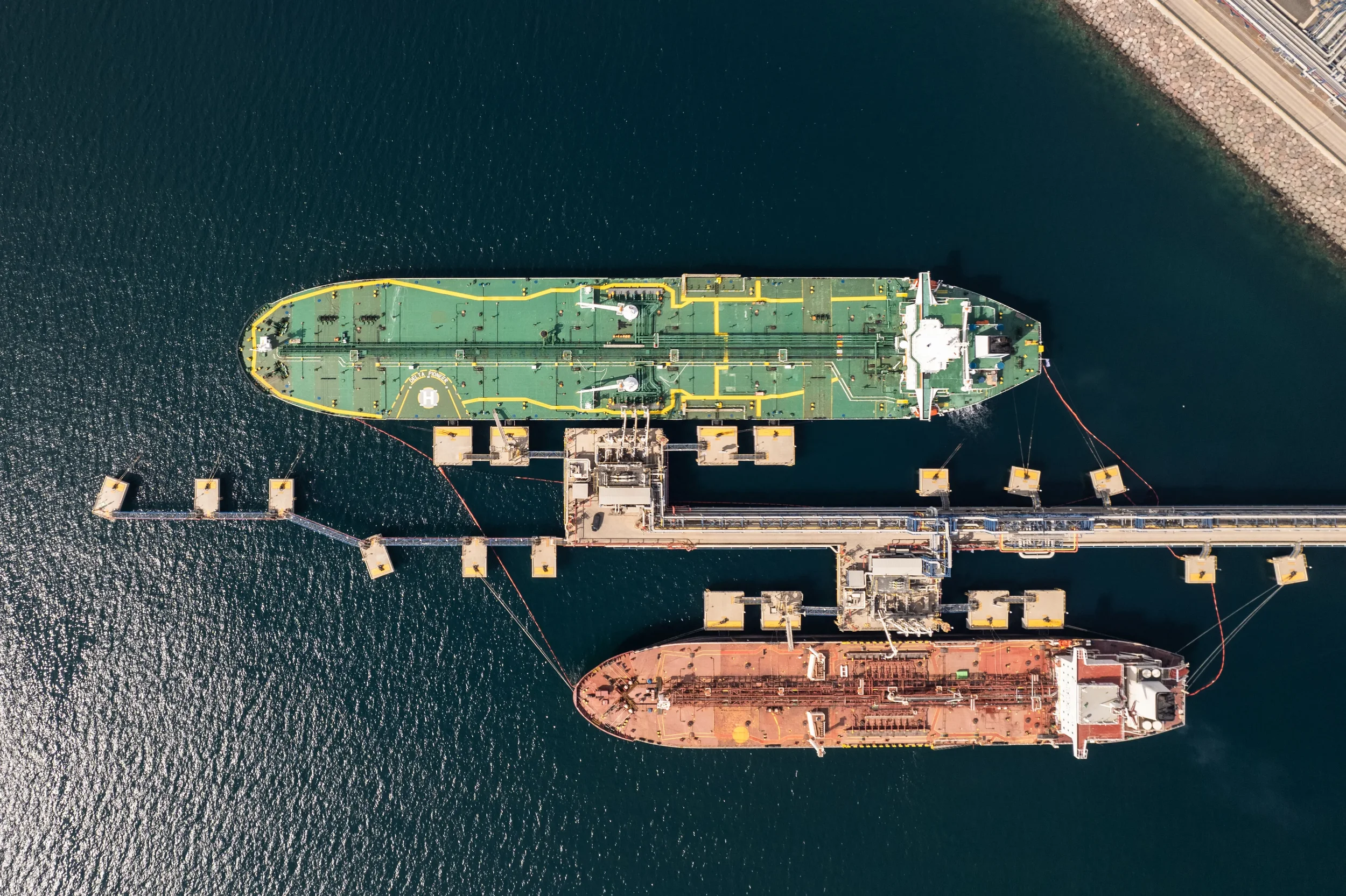
Refinery Jetty Tanks
At this refinery landmark, DSIB principals were involved in optimization of the onshore-terminal interface for safer ship-shore transfers.
-
![Oil tanker ship with the word 'Ammonia' written on the side, sailing in open water.]()
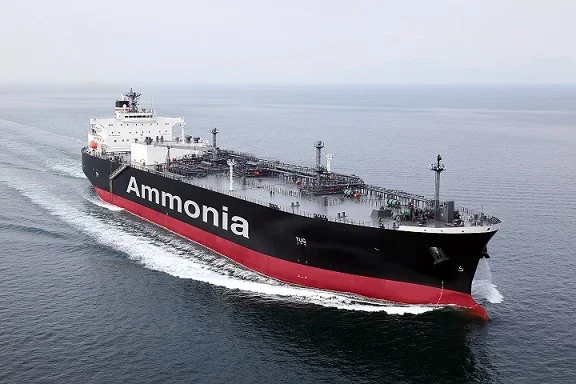
Subsea Ammonia Transfer
DSIB principals served as strategic lead for safety and risk management on a first-of-its-kind offshore terminal and 6-kilometer subsea pipeline system designed for anhydrous ammonia transport.
-
![Gray wall with an emergency shut-off sign and a small control box.]()
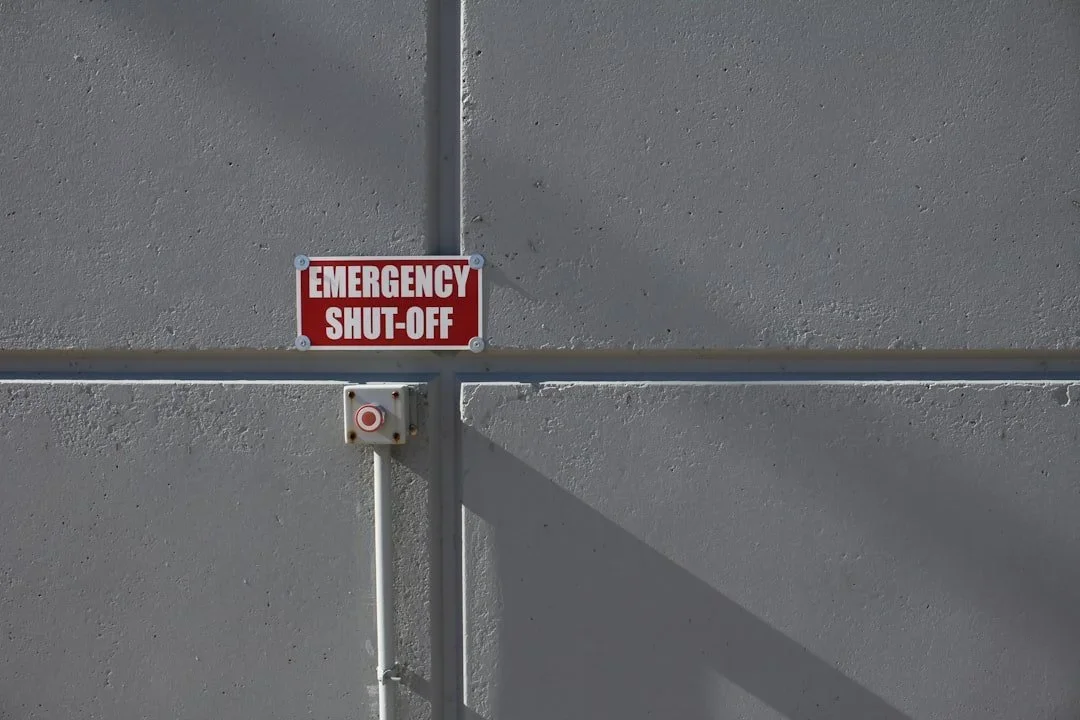
Functional Safety Assessment-Ready by Design
This was the first EPC project in Türkiye where the owner required FSA1–2 by an international assessor, Exida, at this scale and at this stage of design. Our principals led functional safety management of the complete engineering package.
-
![Nighttime view of a nuclear power plant with cooling towers emitting steam, illuminated by lights, with an industrial landscape in the background.]()
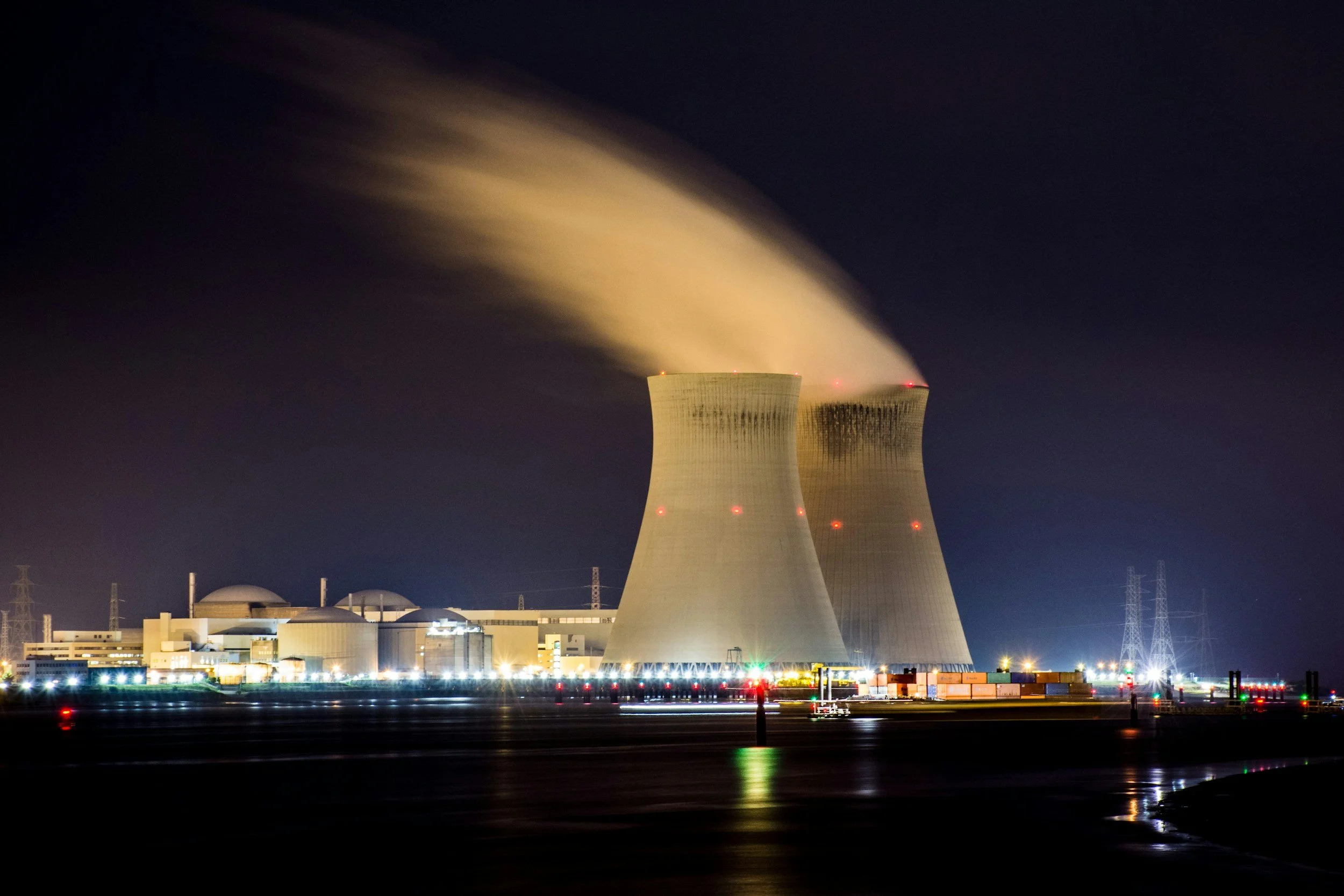
Nuclear Safety Development
Our principals participated in a nuclear safety development programme organized by the Wakasa Wan Energy Research Center in 2017, as part of preparations for Türkiye’s second planned nuclear facility.
-
![Map of Turkey showing key cities with red location pins, titled 'Our SEVESO Footprint.' Cities include Istanbul, Kocaeli, Sakarya, Kütahya, İzmir, Afyonkarahisar, Antalya, Konya, Mersin, Hatay, Gaziantep, Şanlıurfa, Mardin, Şırnak, Sirnak, Batman, İdil, Silvan, Erzurum, Kars, Elazığ, Muş, Diyarbakır, Sirnak, and other regional locations.]()
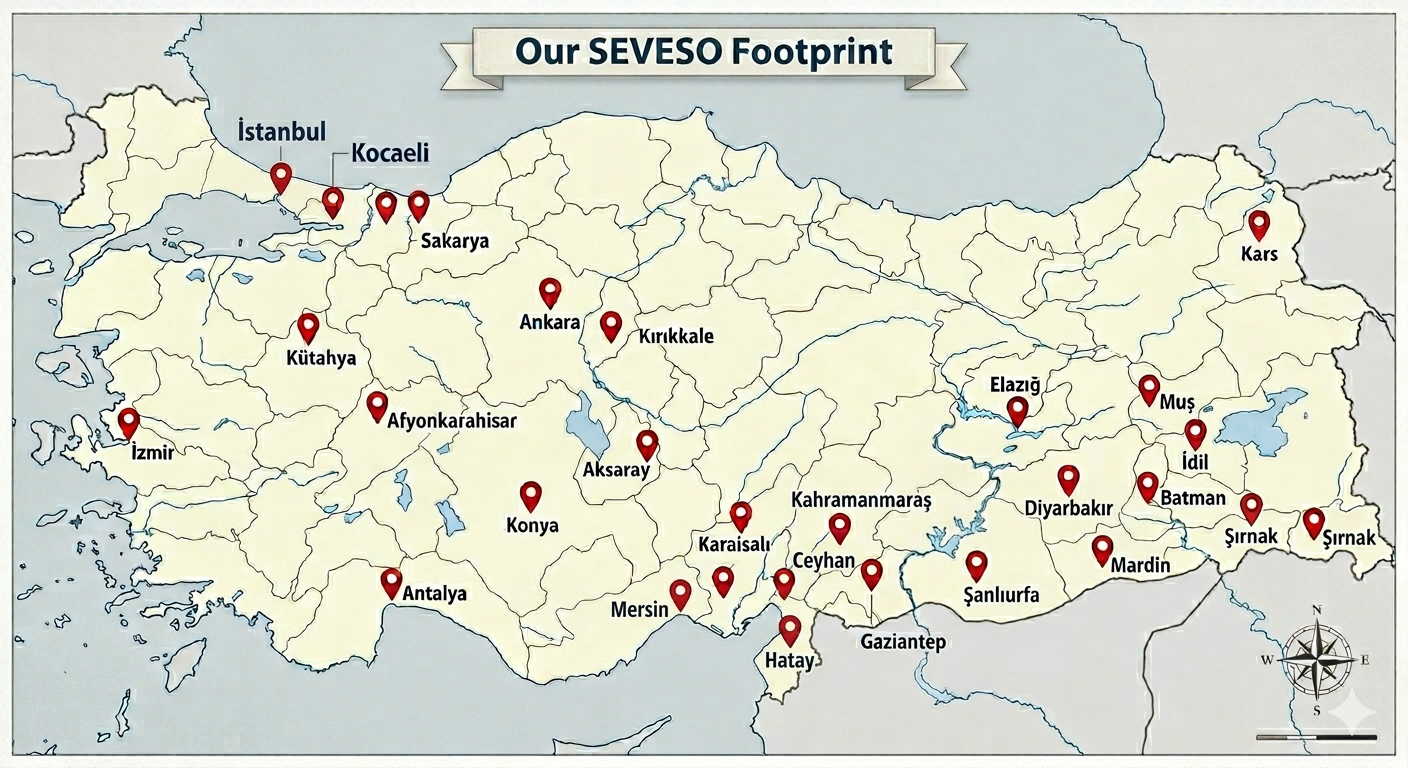
SEVESO Projects
Across nearly 40 upper and lower tier facilities in Türkiye, our principals led one of the most comprehensive Seveso advisory engagements delivered in the country.
-
![A large conference or seminar room filled with people in business attire, sitting at desks with bottles of water, microphones, and notes, attending a presentation or panel. The room has a high ceiling with a large, ornate chandelier and modern lighting.]()
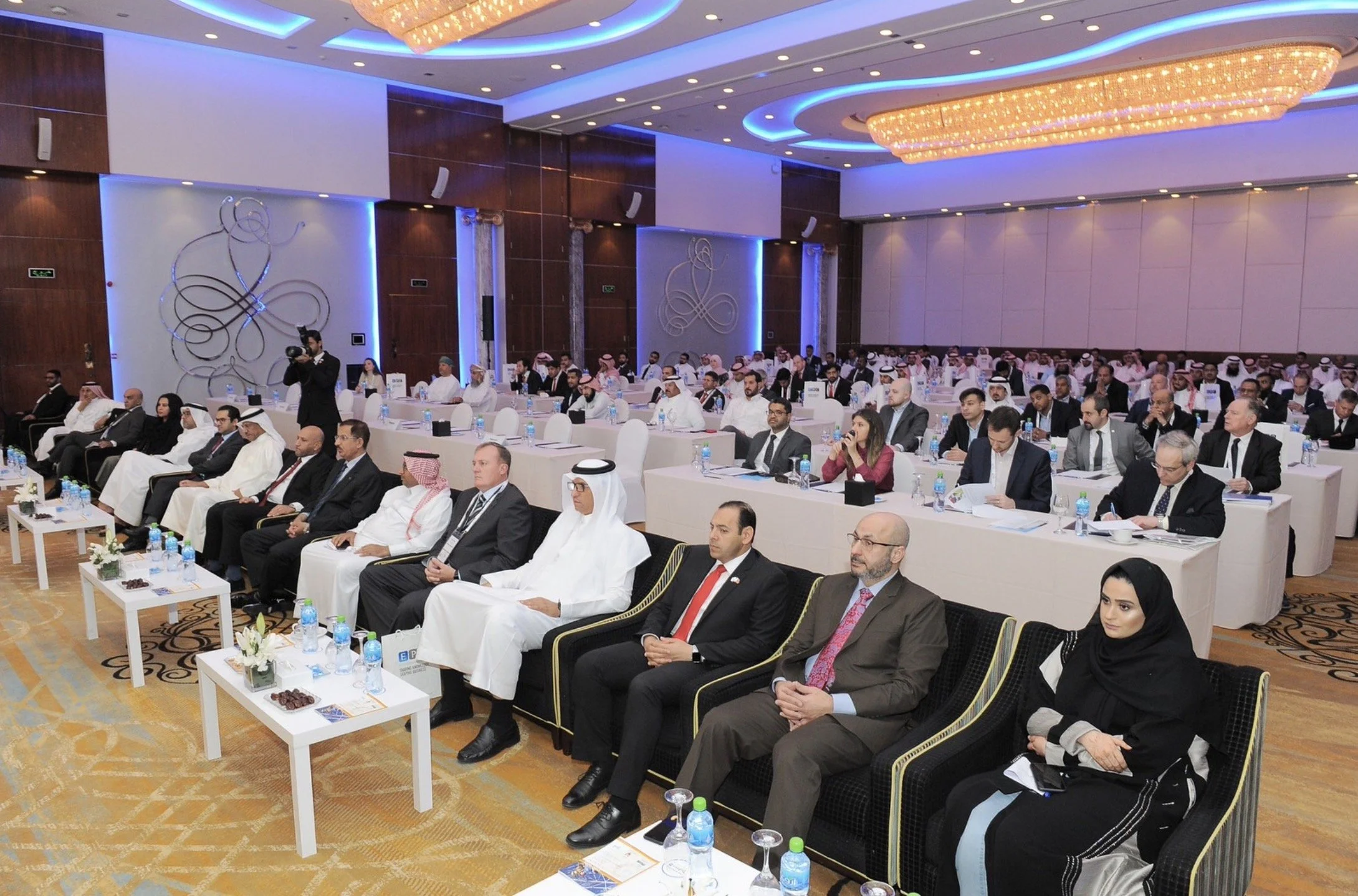
Gulf Safety Awards
We developed a methodology that was shortlisted at the Gulf Safety Forum Safety Competition-Bahrain 2019— one of the region’s most prominent safety engineering platforms.
-
![View of an industrial oil refinery with white storage tanks, tall distillation columns, and smokestacks emitting smoke, near a body of water under a partly cloudy sky.]()
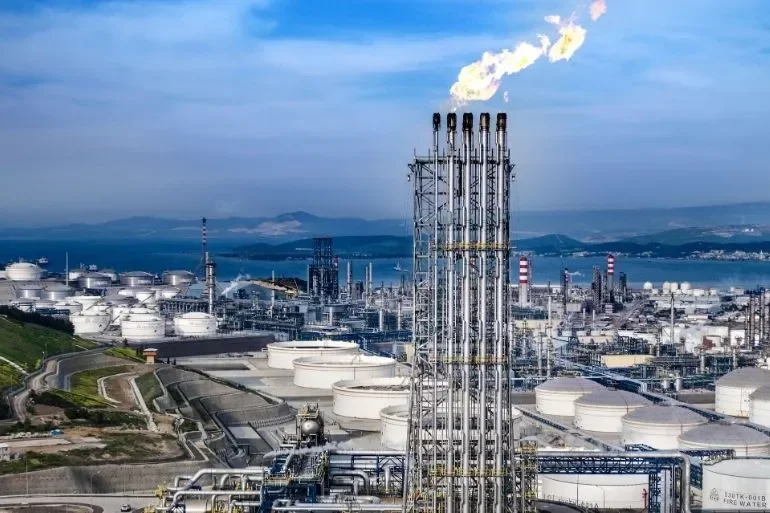
Petrochemical Flare Network
At this petrochemical landmark, our principals verified the stack heights of a four-tip emergency flare network serving three toxic and flammable production lines.
-
![Close-up of black charcoal burned and cracked, showing its rough texture.]()
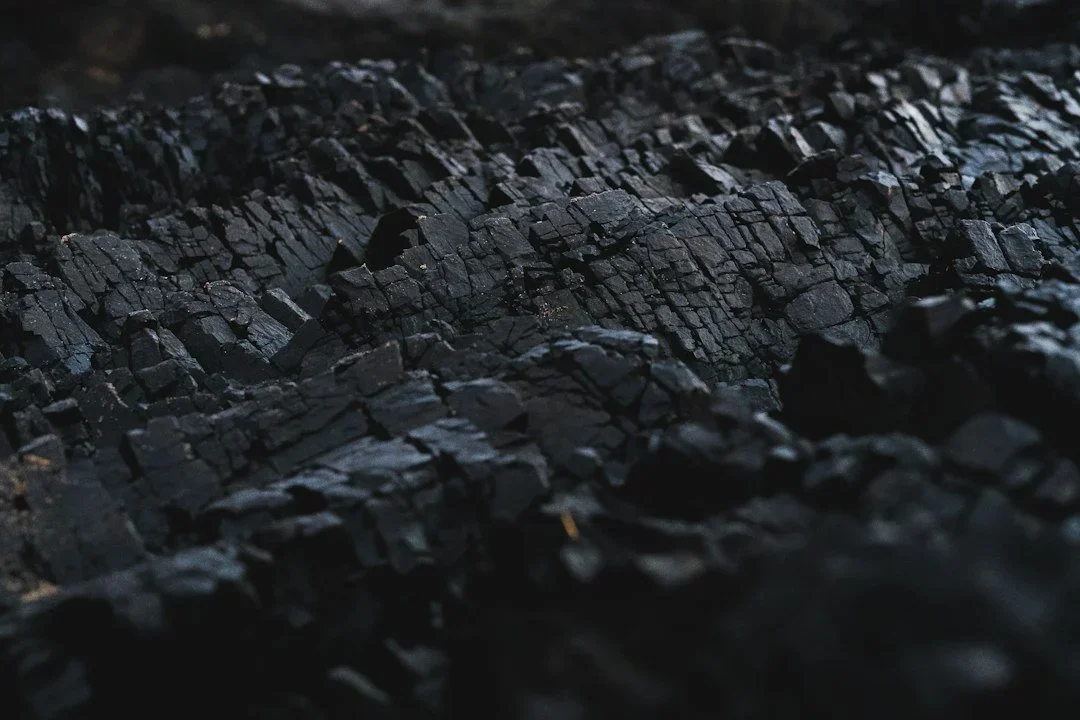
Pilot to Commercial: Risk Management Planning
For a coal-gasification-to-chemicals pilot plant designed by a research institution, DSIB principals were involved in developing a technical risk management method built on PMI Risk Management Methodology.

Common Indicators of Complexity Affecting Safety-Critical Decisions and Project Performance
15 risk factors that quietly shape cost, schedule and safe operation on complex projects. Mark the ones you recognize and get back a tailored reading of where your project stands, with practical recommendations for each.
 Confidential
Operating Plant Safeguarding Design Basis Verification
A structured multi-disciplinary assessment of the alignment between the safety design basis established during design and the safeguards as modified, integrated and reconfigured today.
A planned capacity increase would take parts of Company A’s plant beyond the cases its safeguards were designed for. Before relying on those safeguards, the company commissioned a verification of whether the safety design basis still reflected the plant in service. Each safeguard in the agreed focus areas was traced back to its authorized basis, and every difference was either reconciled against documented evidence or registered as a gap.
The practical endpoint is clear: The organization knows what it can rely on today, where confidence is limited, and how to close the difference without losing control of the work.
Deliverables
Current Safety Basis Dossier and Confidence Register
The agreed assessment baseline. The governing sources are listed with their latest authorized issues, before and after owner acceptance, each with a stated level of confidence. The assumptions and limitations the assessment worked under are recorded with them.
Reconciliation Map
The comparison rationale from design freeze through owner acceptance to operation, showing the link between predecessors, configuration documents, deviations, MoC evidence and current reliance. Where relevant, it includes a design-focused partial SCE/TIV traceability plan.
Integrated Gap and Decision Register
Every gap under its taxonomy class, with evidence notes, relevance to the hazard, potential consequences, safeguarding group and tags. Field evidence raised through feedback is logged alongside. Each entry ends with the decision needed and the recommendation.
Unit/Plant-Wide Alignment and Exposure Profile
A consolidated view of major deficiencies by unit, safeguarding area and equipment group.
Risk-Informed Remediation Roadmap
Short-, mid- and long-term actions, sorted by route: Evidence recovery, revalidation, reconciliation, reconstitution, re-engineering, and shutdown needs where they arise. Each action is marked for its CAPEX or OPEX relevance, for planning.
Management Decision Brief
The alarming points and highlights. The residual uncertainty. The decisions and assumptions that rest with the owner. Remediations with operating and capital cost relevance. A retrospective on how reliable the plant’s overall safety philosophies have proven to be.
© Design Safety Intelligence Bureau. All rights reserved. This document and its contents may not be copied, reproduced, distributed, downloaded or printed, in whole or in part, without prior written permission.
Maintaining SIS Integrity From Owner Acceptance Through Operation
Check how confident you are in the system you took over, tick the support you would need in each phase of the operating lifecycle and leave with an automated needs list.
— The first draft of a work scope